
Dialing in Idaho: Which Phone Codes When
Local dialing in Idaho takes all ten digits, every time, everywhere in the state. That has been the rule since August 2017, when the 986 overlay ended seven-digit dialing for good. Beyond local calls, the format shifts with the destination, and each call type has its own phone code pattern.
| Call Type | Phone Code Format | Example |
|---|---|---|
| Local within Idaho | 10 digits (area code + 7) | 208-334-8000 |
| Long distance within the US | 1 + 10 digits | 1-208-334-8000 |
| Toll-free | 1 + 8xx prefix + 7 digits | 1-800-926-2588 |
| International from Idaho | 011, then country code, then number | 011-44-... |
| Help-line shortcut | 3-digit N11 code | 211 |
Some carriers still insist on the leading 1 for toll calls from landlines, while mobile phones generally accept either form. Storing numbers as +1 followed by ten digits keeps them dialable from anywhere.
N11 Phone Codes That Work in Idaho
The N11 family is nine three-digit codes reserved across North America, and Idaho puts most of them to work. One gap stands out: 311 does not operate statewide in Idaho, so that code only matters if a specific city advertises it. Everything else routes as the table shows.
| N11 Phone Code | What It Reaches in Idaho |
|---|---|
| 211 | Idaho CareLine community services; also 800-926-2588 or text 898211 |
| 311 | No statewide service; city-specific only where advertised |
| 411 | Directory assistance through your carrier, often with a fee |
| 511 | Idaho road conditions, closures, and travel info, 24/7 |
| 611 | Your own phone carrier's service line |
| 711 | Idaho Relay for TTY users; 800-377-3529 also connects |
| 811 | Call before you dig; routed to one of three Idaho centers |
| 911 | Emergency police, fire, and medical dispatch |
| 988 | Idaho Crisis and Suicide Hotline, call or text, 24/7 |
The full national rules behind these assignments live with the numbering administrator, whose abbreviated dialing code reference is shown here.
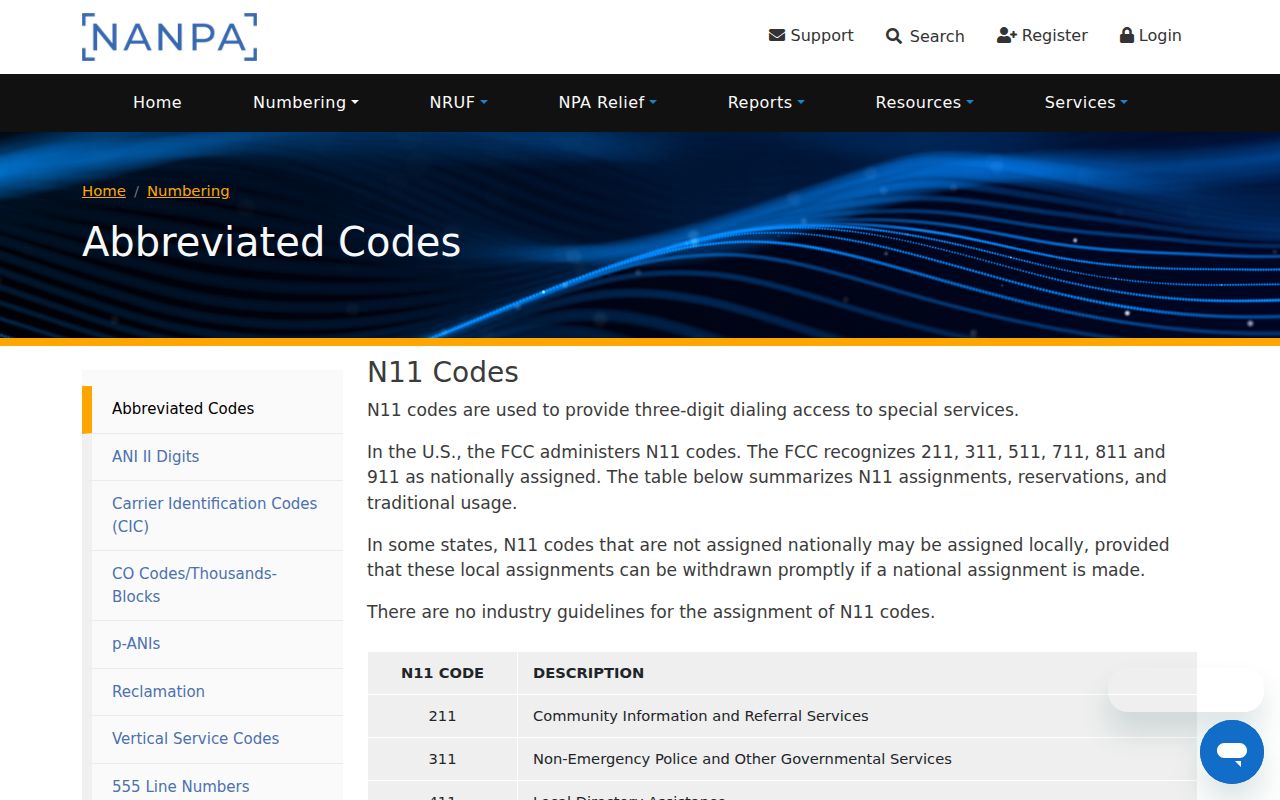
NANPA governs what each code may be used for nationally, while Idaho agencies decide what actually answers on this end of the line.
211 and 988: Idaho's Help-Line Phone Codes
Two of those short codes carry the most weight in daily life, and they solve different problems. Dial 211 when the problem is practical: food, rent help, utility assistance, or finding the right social service. The Idaho Department of Health and Welfare runs it as the 211 Idaho CareLine, with specialists on weekdays from 8 to 6 Mountain Time and a searchable database behind the phone line.
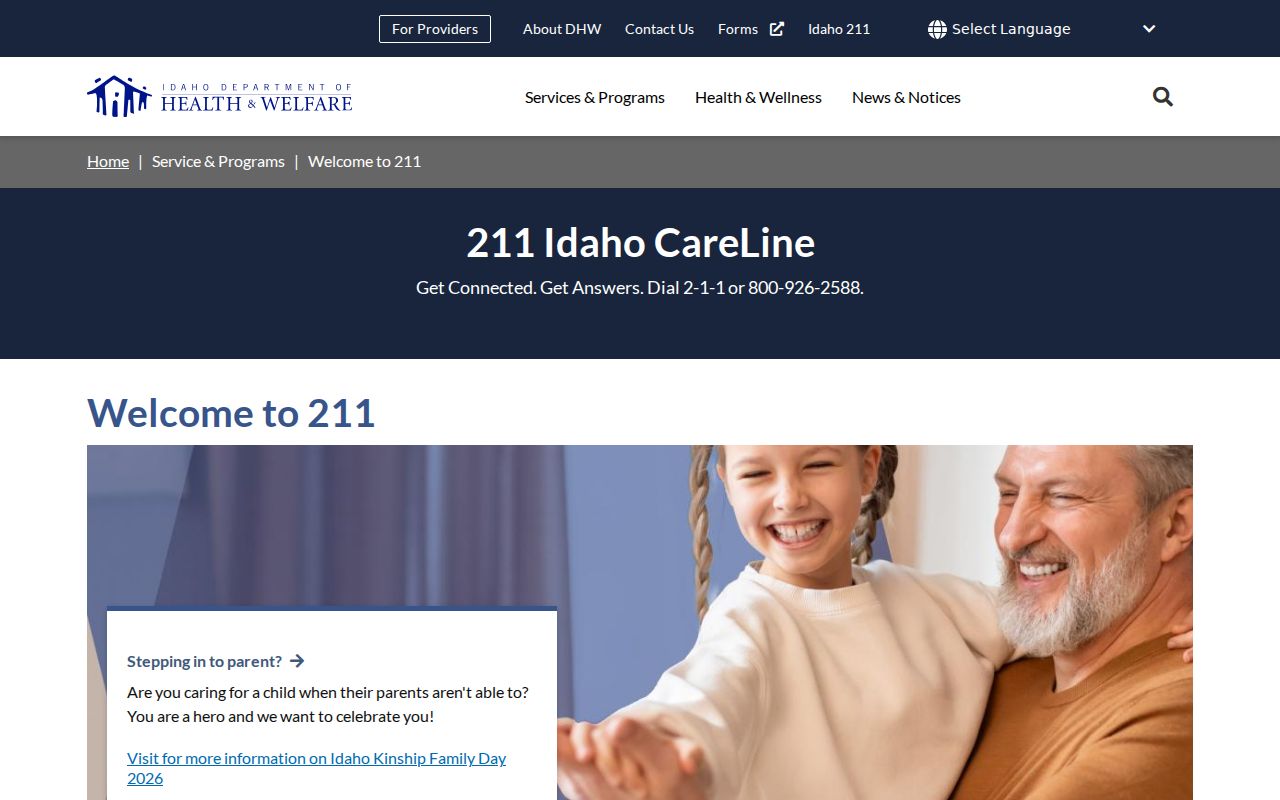
Texting 898211 reaches the same service, useful when a call is not possible. Dial 988 when the problem is a crisis: suicidal thoughts, self-harm risk, severe distress, or fear for someone else. The Idaho Crisis and Suicide Hotline answers that phone code around the clock by call, text, and chat.
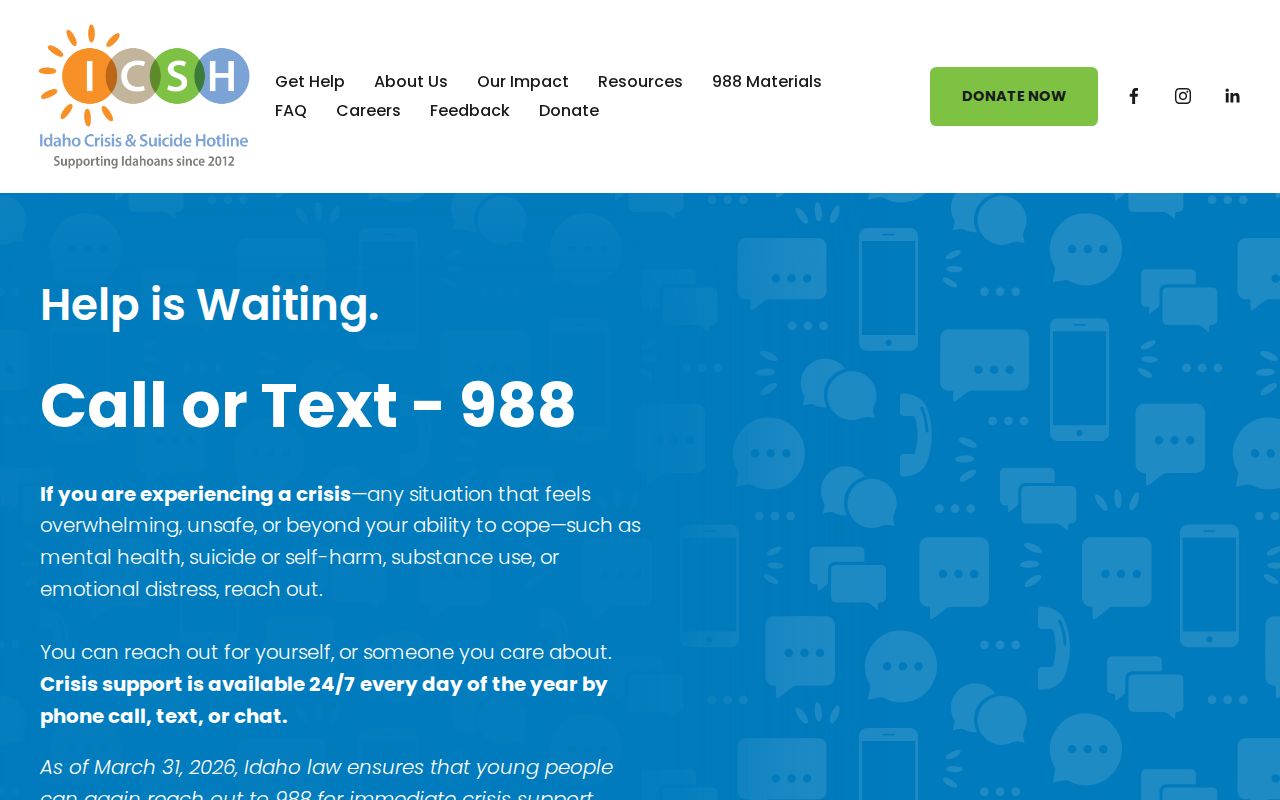
Neither code replaces 911. When someone is in immediate physical danger, 911 dispatches help; 988 counsels and connects.
811 and 511: Digging and Driving Codes
Idaho gives two more N11 phone codes a distinctly local shape. Behind 811, the state actually runs three separate notification centers. Dig Safe North Idaho answers for Bonner, Boundary, and Kootenai counties at 800-428-4950. North Idaho 811 covers Benewah and Shoshone at 866-242-5844. Digline takes every other county at 800-342-1585. The Division of Occupational and Professional Licenses lists the split on its one-call centers page, captured below.
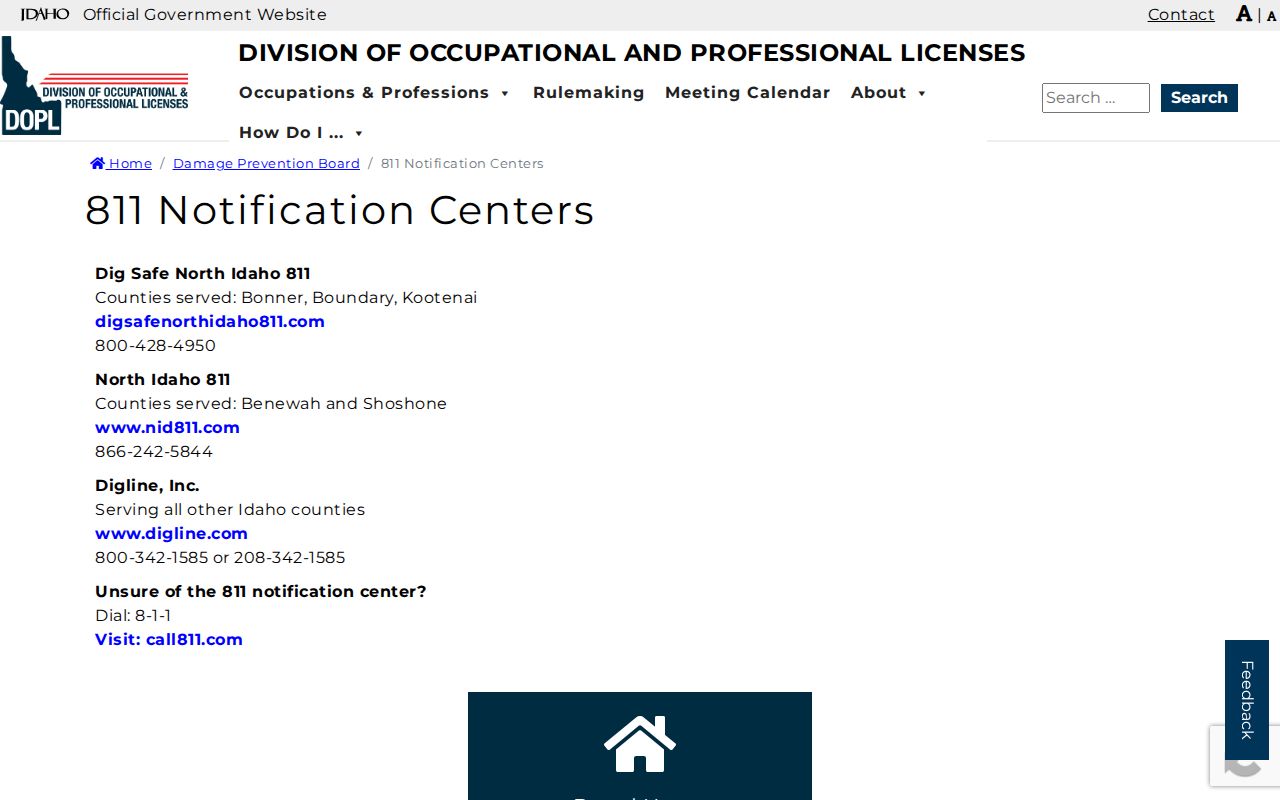
Dialing plain 811 routes to the right center automatically, so the county detail only matters for direct calls or web tickets. The 511 code earns its keep in Idaho winters. Mountain passes, wildfire smoke, and long rural highways make Idaho 511 a genuinely practical phone code, with road reports and cameras available by phone, app, and web at any hour.
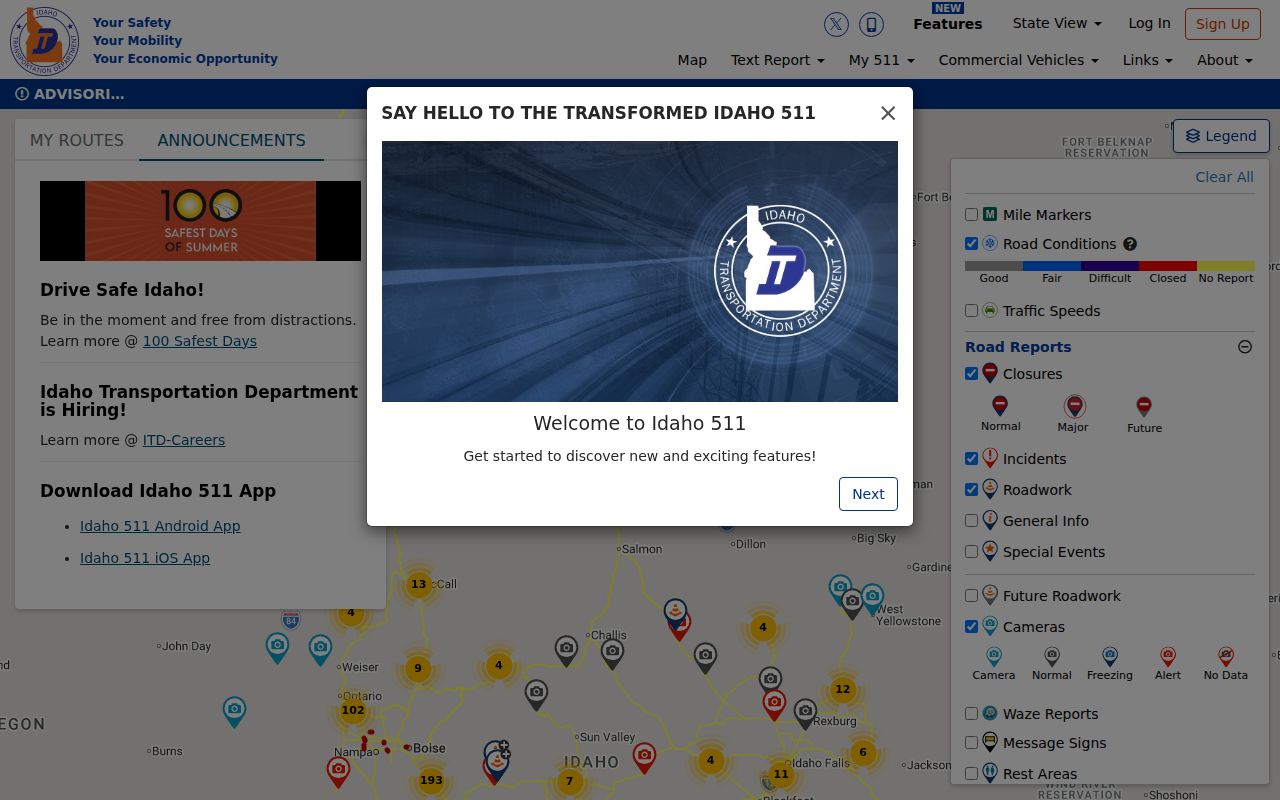
Travelers near the Oregon, Washington, or Montana lines can use 888-432-7623 when the three-digit code will not connect from a border cell tower.
Note: Drivers can also reach Idaho State Police from a mobile phone with *ISP, dialed *477, for reckless driving and crashes, with 911 reserved for emergencies.
Star Codes on Idaho Phone Lines
Star codes, formally called vertical service codes, switch features on your own line for one call or until canceled. Carriers decide which ones work, and support is strongest on traditional landlines, so results vary between a CenturyLink line in Boise and a mobile plan. The common set behaves like this.
| Star Phone Code | Action |
|---|---|
| *57 | Trace a threatening call so law enforcement can follow up |
| *60 | Block selected numbers, where the carrier supports it |
| *67 | Withhold caller ID on one outgoing call |
| *69 | Return or reveal the last incoming call |
| *70 | Suspend call waiting during a single call |
| *72 | Turn call forwarding on |
| *73 | Switch forwarding back off |
| *77 | Refuse calls that hide their ID |
| *82 | Release caller ID once from a line that normally blocks it |
The national registry of these codes sits with NANPA as well, on its vertical service code reference, pictured here.
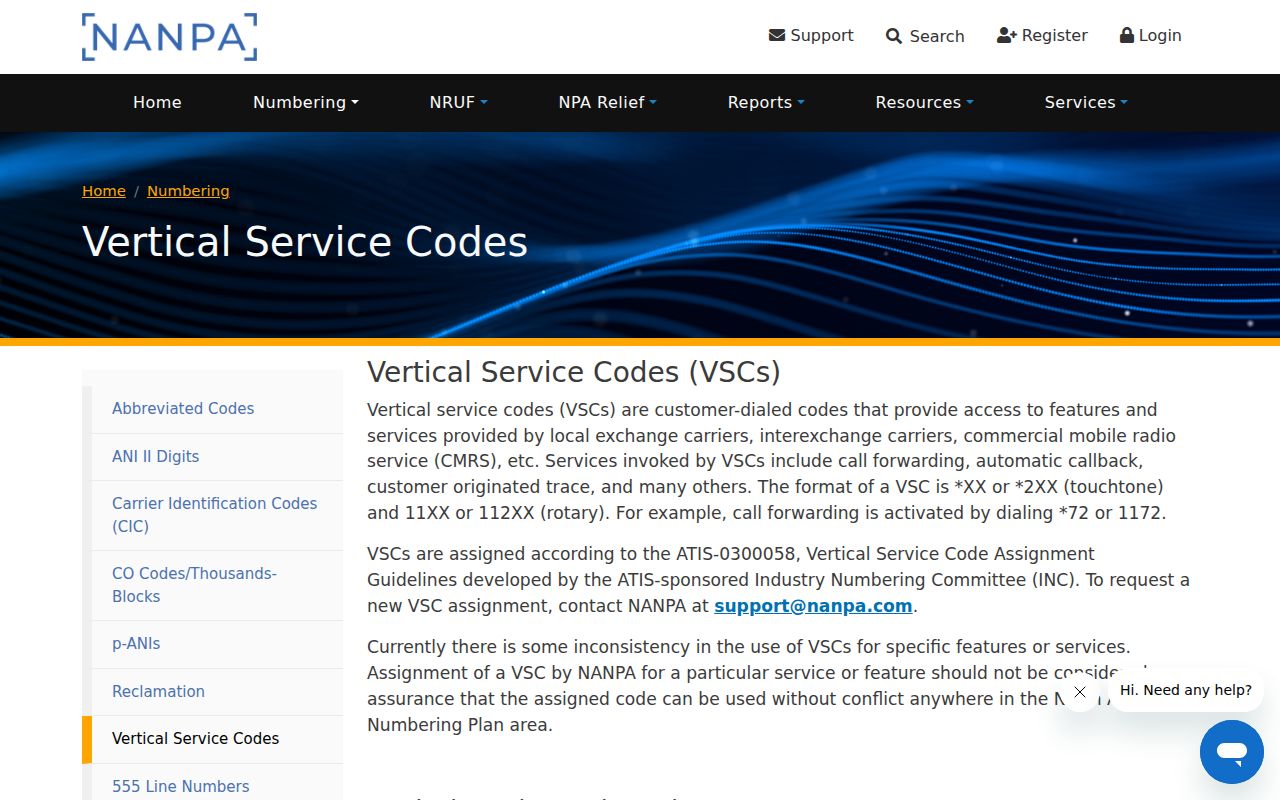
When a star code does nothing, the carrier simply has not enabled it, and the same feature usually hides in the carrier's app instead.
The Area Codes as Idaho Phone Codes
The three digits that open every Idaho number are phone codes too, and the state's set is unusually small. Both belong to every city at once, which is rare, and the geography behind that arrangement gets its own treatment under Idaho phone area codes.
- 208 - Idaho's original code, assigned in 1947, statewide
- 986 - statewide overlay, issuing new numbers since 2016
For dialing purposes the two behave identically. Ten digits reach either one, and no Idaho call is long distance just because it crosses between them.
Toll-Free Phone Codes
A toll-free code sits where an area code would, yet it maps to no place at all. An 800 number claiming an Idaho connection could answer anywhere, since these codes bill the called party instead of marking geography. Idaho agencies use them heavily: the CareLine, SNAP applications, the PUC, and several universities all publish toll-free lines beside their 208 numbers. Seven prefixes exist because each one eventually filled.
| Toll-Free Phone Code | Rolled Out |
|---|---|
| 800 | 1967 (original) |
| 888 | 1996 |
| 877 | 1998 |
| 866 | 2000 |
| 855 | 2010 |
| 844 | 2013 |
| 833 | 2017 |
The premium families deserve more caution. Codes like 900 and the legacy 976 exchange can bill by the call, and many carriers block them outright.
Country Code +1 and Calling Beyond Idaho
Idaho sits inside the North American Numbering Plan, the +1 region shared by the US, Canada, and parts of the Caribbean. Domestic calls never need the country code, but international ones do, in both directions.
- Calling abroad from an Idaho landline: 011 first, the destination country code next, the local number last.
- Calling abroad from a mobile: hold 0 until + appears, then add the country code and number.
- Reaching Idaho from abroad: that country's exit code comes first, then 1, then the ten Idaho digits.
The mobile + trick is the reason to store every contact as +1-208 or +1-986: the same entry dials cleanly from Boise or from overseas.
Prefix Phone Codes and Idaho Rate Centers
Between the area code and the line number sit three more digits, the NXX prefix, and in Idaho they carry the geography the area codes gave up. Prefixes belong to rate centers, the billing zones of the phone network. Boise's cluster includes the state-government workhorses 334 and 332. Idaho Falls runs prefixes like 522 through 529, Pocatello holds an old contiguous block from 232 through 239, Twin Falls uses 733 through 738, and Coeur d'Alene answers on 664 through 667. Overlay prefixes such as 986-200 in Boise map to the same rate centers.
A prefix suggests origin, nothing more. Portability lets numbers keep their prefix through carrier moves, and spoofing fakes familiar prefixes deliberately. A caller showing 208-334 looks like Boise state government, but only a call back through a published directory line proves it.
Spam Labels and Caller ID Checks
The "Likely Spam" tag on incoming calls is the visible edge of STIR/SHAKEN, the FCC-required system in which carriers attach digital signatures to calls handed between networks. A failed or missing signature, heavy call volume, and user reports all feed the label. It works as a warning, not a verdict: legitimate Idaho offices occasionally get flagged, and well-run scams sometimes slip through clean. The Idaho Attorney General's robocall enforcement since 2025 has pushed on exactly this gap, investigating providers that kept routing suspect traffic. Whatever the screen says, payment demands, warrant threats, and requests for Medicare or Social Security numbers over the phone are the real tells.
Phone Code Terms in Plain Language
A few pieces of jargon cover the whole numbering system, and each one is simpler than it sounds.
- NPA
- Numbering Plan Area, the area code: 208 or 986 anywhere in Idaho.
- NXX
- The prefix after the area code, tied to a rate center like Boise or Lewiston.
- N11
- The reserved three-digit service codes, 211 through 988.
- Vertical Service Code
- A star-plus-digits code that controls a feature on your own line.
- Toll-Free Prefix
- A non-geographic code, 800 through 833, billed to the called party.
- NANP
- The North American Numbering Plan, the +1 system Idaho numbers live in.
Where to Verify an Idaho Phone Code
Every one of these phone codes can be checked against a primary source. Area code and prefix assignments belong to NANPA. Consumer rules, complaint handling, and the caller ID framework belong to the FCC. Between the two, any code a caller quotes can be confirmed or debunked in a few minutes.
Note: Confirming a code is real never confirms who dialed from it, so a doubtful caller still gets checked against the relevant office's own directory.